Wet Experiment vs Dry Experiment
The note is generated by CatDesk.
What is a Wet Experiment (湿实验)?
A “wet experiment” (湿实验) refers to laboratory work that involves the physical manipulation of biological or chemical materials — liquids, cells, tissues, organisms, reagents, and other tangible substances. The name comes from the fact that most of these experiments deal with solutions, buffers, cultures, and other “wet” materials in a bench-top lab setting.
Typical wet experiment activities include: running PCR (polymerase chain reaction), growing cell cultures, performing gel electrophoresis, conducting chemical assays, DNA/RNA sequencing library preparation, protein purification, animal model studies, and drug compound screening.
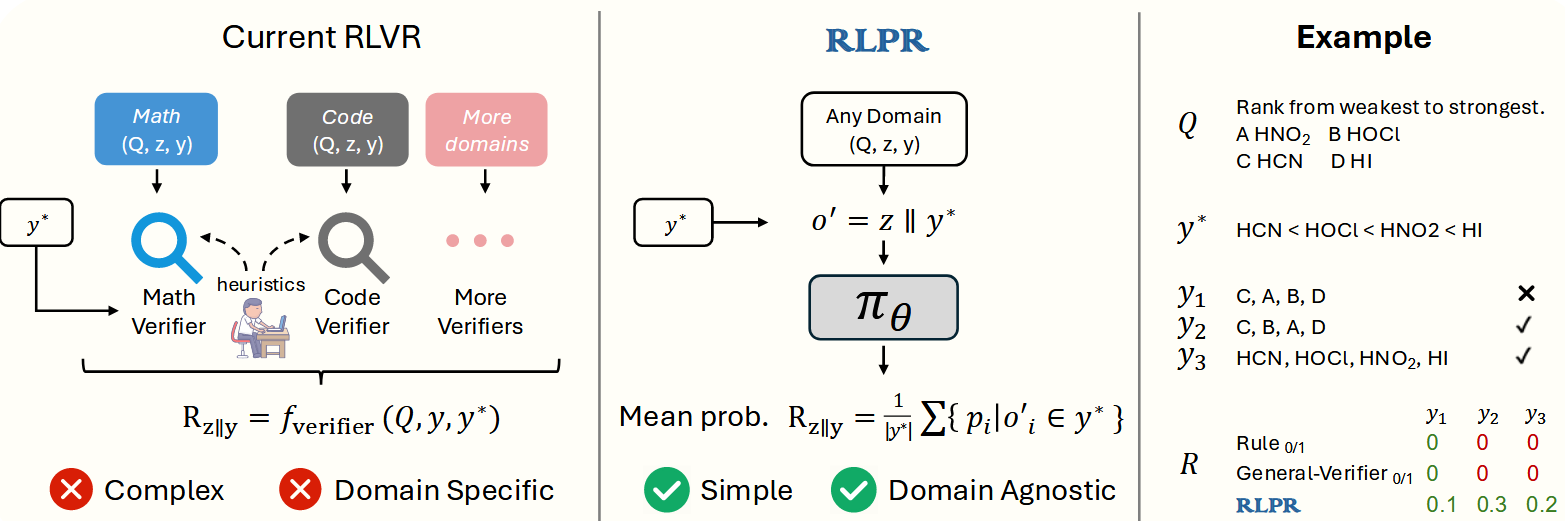
Improving Academic Writing heuristic: 用于人工设计的规则,e.g., hand-crafted heuristic rewards
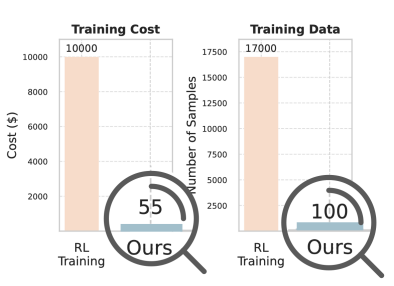
图表中数值差异过大怎么呈现? 用放大镜:
 Paper Reading
这里记录我读的paper,或是整篇文章,或是文章中最有insight的部分。
25.10.10
- CARFT: Boosting LLM Reasoning via Contrastive Learning with Annotated Chain-of-Thought-based Reinforced Fine-Tuning
- 用embedding 做contrastive learning,作为ReFT(PPO)的regular loss
- disadvantage:实验的数据集较为简单
RL w/o verifier
RLPR: Extrapolating RLVR to General Domains without Verifiers 25.10.29